Playgramma
Plant Maintenance · PMSAP Plant Maintenance (PM), explained by playing it
Machines break — and every minute a machine is down is production lost. SAP Plant Maintenance turns that firefight into a disciplined work-order lifecycle. In Playgramma's Plant Maintenance module you keep an oil & gas plant running: screen alerts, raise notifications and orders, issue spares and confirm the repair.
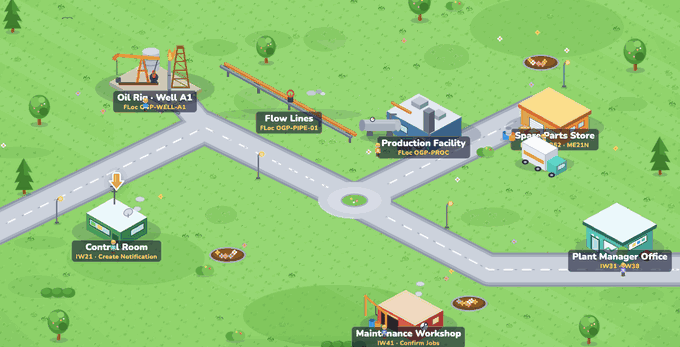
What you'll learn
- Screen equipment alerts and raise notifications
- Plan maintenance orders with work centres and spares
- Issue parts, confirm the work and technically complete it
What Plant Maintenance actually is
PM manages the equipment that keeps a plant producing. It records what broke, authorises and costs the repair, draws spare parts from the store, and measures how well maintenance is doing — availability, breakdowns and MTTR. It's where reliability meets money, so it leans on both MM (spares) and CO (cost).
The work-order lifecycle, step by step
These are the stages you complete in the game, with the real SAP transaction behind each one:
- Alert dismissed — notification screening in action. Condition-monitoring alerts are screened first; false alarms are closed so the backlog only holds real work.
- Maintenance Notification created
IW21— the official record that equipment needs work: functional location, equipment, damage code, priority and the breakdown indicator. Notifications build the malfunction history. - Maintenance Order created & released
IW31— the order authorises the work, carries the responsible work centre, plans the hours and reserves the spare parts. Every cost from here collects on this order. - Goods Issue posted
MIGO · movement 261— the reserved parts leave the store (stock goes down!) and their cost books onto the order. This is PM meeting MM. - Work confirmed
IW41— actual hours are posted as a final confirmation, the malfunction ends (the MTTR clock stops) and the equipment is tested. - Order technically completed
TECO · IW32— the order is locked against new costs and settles to cost centre CC-4100. The equipment is back online and production resumes.
Where the other modules show up
- Empty store → Purchase Order
ME21N— when the store drops below its reorder point, Procurement restocks the spares. In a full landscape this is the P2P process: PR → PO → Goods Receipt. - KPIs reviewed
IW38— availability, breakdowns, MTTR, hours and cost: the numbers maintenance exists to improve. This is the equipment history talking. - Why it matters — while equipment runs, the plant produces and earns. Every breakdown minute is production lost, which is why maintenance is measured on availability.
Play it, don't just read it
Keep a plant running through the full PM lifecycle — free, no install.
Play Plant Maintenance →